Puppy Nipping vs Aggression – What’s Normal?

Admin
Published On Feb 23,2026
One of the most worrying moments for new puppy owners is when those tiny teeth come out and a growl accompanies them.
It’s very common for people to ask, “Is my puppy being aggressive?”
In most cases, the answer is no.
Puppy nipping is normal. True aggression in young puppies is far less common. The challenge is knowing the difference.
Why puppies nip
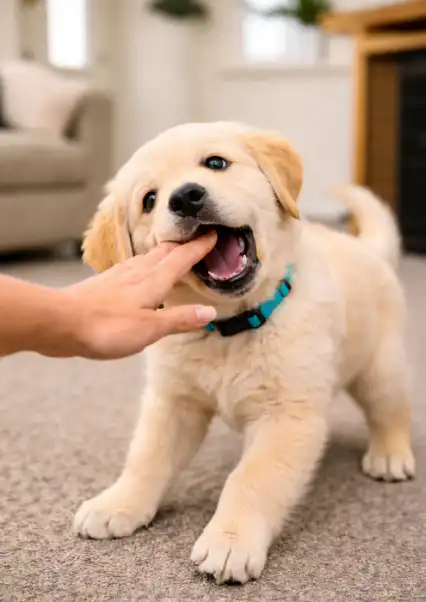
Puppies explore the world with their mouths. They also play with their littermates using teeth. When they come into your home, that behaviour doesn’t just disappear.
Nipping is usually linked to:
- Play
- Over-excitement
- Teething
- Overtiredness
- Frustration
It can look intense, especially when sharp teeth are involved. But intensity alone doesn’t equal aggression.
What normal puppy nipping looks like
Normal mouthing often includes:
- Bouncy body language
- Loose, wiggly movement
- Play bows
- Quick, darting behaviour
- Pauses between bites
The puppy may grab at clothing or hands, but their overall posture is relaxed and playful.
Very often, nipping increases in the evening when puppies are tired and overstimulated.
What real warning signs look like
True aggression in puppies is rare, but it does exist.
Red flags include:
- Stiff body posture
- Hard, fixed staring
- Low, tense growling
- Snapping without playful movement
- Guarding food or toys with intensity
- Biting that escalates quickly rather than diffuses
The key difference is body language. Playful nipping is loose and exaggerated. Aggressive behaviour is tight and tense.
If you are unsure, it’s always better to get professional guidance early rather than wait.
Growling doesn’t automatically mean aggression
Growling during play can be completely normal. Puppies vocalise when excited.
Growling becomes concerning when paired with stiffness, freezing, or guarding behaviour.
It’s important not to punish growling. Growling is communication. If you suppress it, you remove the warning system and can make behaviour more unpredictable.
Why early guidance matters
Most puppy nipping improves significantly with:
- Consistent boundaries
- Teaching alternative behaviours
- Managing arousal levels
- Ensuring adequate sleep
- Proper socialisation
However, if early signs of guarding or tension are ignored, they can develop into larger issues during adolescence.
The first few months are when habits are formed.
The biggest mistake owners make
Panicking.
When owners assume normal puppy behaviour is aggression, they often react too strongly. Shouting, physical correction, or dominance-style techniques can create fear and escalate behaviour.
Calm, structured training works far better.
When to seek help
If your puppy:
- Guards food or toys intensely
- Bites without clear play signals
- Becomes stiff or freezes before biting
- Shows escalating intensity
It’s time to get structured guidance.
At Paws Claws & Tails, we help owners understand puppy body language in our Puppy School on the Sunshine Coast. We show you what normal looks like, what needs adjustment, and how to guide behaviour early before it becomes a problem.
We also work through mouthing, jumping, settling and social skills in a structured environment so both you and your puppy build confidence.
If you’re unsure whether your puppy’s behaviour is normal or something more, it’s always better to ask early.
You can learn more about our Puppy School here:
Most puppies aren’t aggressive. They’re learning. And with the right structure, guidance and consistency, that learning turns into calm, confident behaviour.